From adolescent girls confronting online violence to older women navigating barriers to inheritance and property rights, women across generations continue to face obstacles in accessing justice. At the 70th session of the Commission on the Status of Women (CSW70), they came together to demand change.
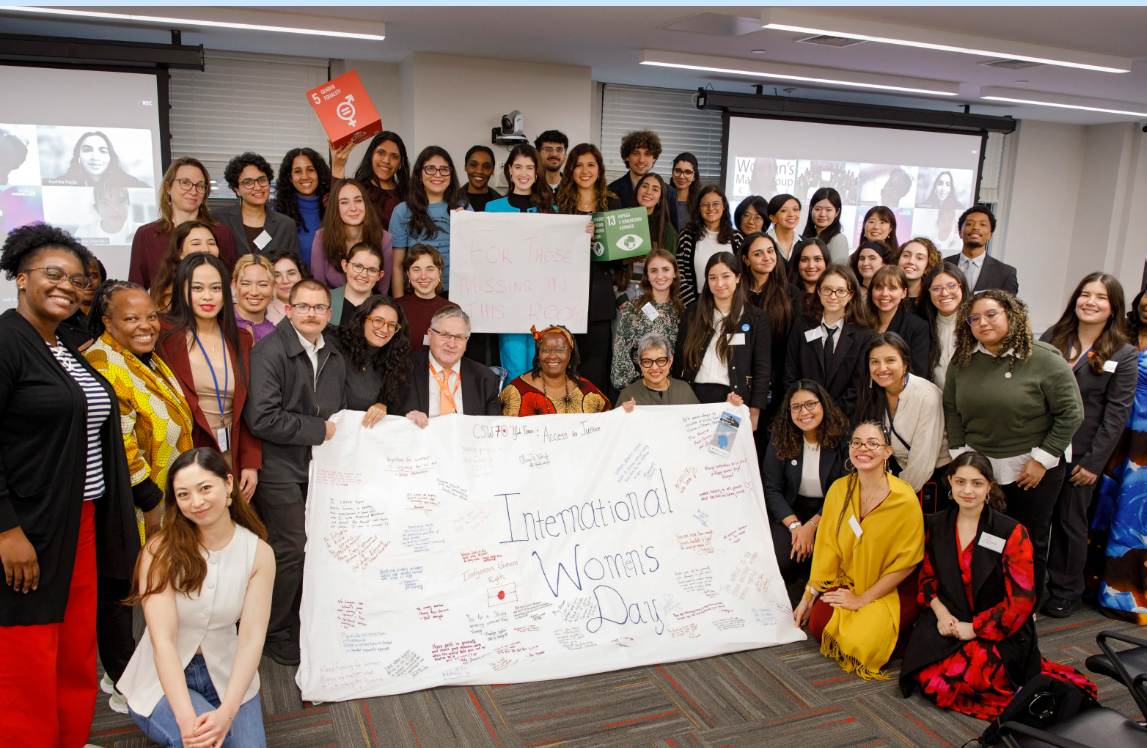
At the annual ‘CSW Youth Forum’ on 8 March and at a panel discussion on ‘Intergenerational approaches to access to justice across the life-course’ on 13 March, girls, young feminists, older women advocates, civil society organizations, and policymakers gathered to identify intergenerational approaches to advancing access to justice for all women and girls across the life course.
Both events, organized by UN Women during the CSW70 , served as a uniquely intergenerational space to share experiences, exchange ideas, and propose solutions to the age-based barriers that continue to prevent women and girls from claiming their rights.
Justice gaps run deepest for the youngest and oldest
Globally, women hold just two-thirds of the same legal rights as men and no country has achieved full legal equality for women and girls. Despite decades of international commitments, the justice gap persists — and it is sharpest at the margins. Adolescent girls and young women face limited legal literacy, parental restrictions on participation in justice processes, criminalization and stigma around sexual and reproductive health rights, and digital surveillance that deters safe reporting. Women’s exposure to conflict has increased by 50 per cent over the past decade, heightening legal vulnerability and justice gaps for younger women in conflict and post-conflict settings.